


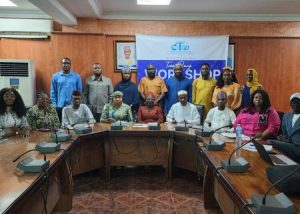
Centre for Information Technology and Development (CITAD), has called for the priotization of women and environment in digital transformation.
The call was made at a two-day national workshop titled Engendering and Greening Digital Policies in Nigeria, organised by the Centre with support from the Association for Progressive Communications (APC), held in Abuja.
The workshop brought together policymakers, regulators and representatives of government ministries, regulatory agencies and private sector institutions to examine gaps in Nigeria’s digital policy framework and propose strategies for integrating gender equality and climate justice principles into national digital reforms.
The Stakeholders in Nigeria’s digital ecosystem who gathered at the forum, called for urgent reforms, to ensure that the country’s digital transformation agenda is gender-responsive and environmentally sustainable.
Speaking at the event, the project lead, Ms Fatima Babakura, said that although Nigeria had made notable progress in expanding digital infrastructure and promoting the digital economy, existing policy frameworks remained largely “gender-neutral and climate-silent.”
“Digital transformation is not just about technology. It is about people. If our policies ignore women, marginalised communities and environmental realities, then we are building systems that will deepen inequality rather than solve it,” Babakura said.
Participants at the workshop reviewed key national policies, including the National Digital Economy and E-Governance Framework, and identified limited operational mechanisms for measuring gender impact and addressing environmental sustainability within digital systems.
They were encouraged to review internal policies within their respective institutions and integrate structured gender and climate considerations into planning, budgeting and implementation processes.
During experience-sharing sessions, participants from different sectors observed that women’s involvement in project design and implementation often resulted in more sustainable community outcomes.
They cited examples of women-led initiatives in rural communities where priorities focused on access to water and social infrastructure, rather than less impactful projects.
The participants agreed that deliberate inclusion of women strengthened policy relevance and enhanced long-term sustainability.
The workshop ended with group exercises in which participants analysed national digital policies through gender and environmental lenses, identifying actionable recommendations for reform.
CITAD reaffirmed its commitment to sustained engagement with policymakers to advance inclusive and sustainable digital governance in Nigeria.
As Nigeria continues to accelerate its digital transformation agenda, stakeholders at the workshop stressed that equity and sustainability must remain at the core of policy implementation.
“Our digital future must be inclusive by design and environmentally responsible,” participants agreed.
