


Dutse, July 27, 2026
Gov. Umar Namadi of Jigawa state, has unveiled five-year Local Government Development Plans for the 27 local government areas, to strengthen grassroots governance and accelerate inclusive development.
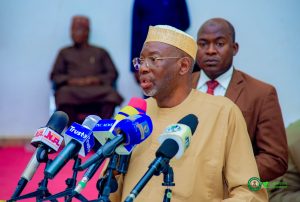
Unveiling the plan on Monday in Dutse, Gov. Namadi said the Local Government Development Plans (2025–2030) would provide each council with a comprehensive roadmap for planning, budgeting, investment and service delivery.
According to him, the plan will promote accountability and evidence-based decision-making across the local councils of the state.
He stressed that the decision, marked the beginning of a new phase of disciplined, data-driven and people-centred development planning designed to improve the quality of governance at the grassroots.
According to Namadi, “the initiative revives and modernises previous local government planning frameworks, including the Local Government Economic Empowerment and Development Strategy (LEEDS), whose implementation was not sustained.
“The lessons from previous development frameworks, showed that strategic plans could only deliver results when consistently implemented and linked to annual budgets and government programmes,” he explained.
Namadi highlighted that each item of the development plan, was carefully aligned with his administration’s 12-Point Agenda, the Jigawa State Comprehensive Development Framework and the Sustainable Development Goals (SDGs).
He added that the documents were developed through extensive consultations involving communities and stakeholders, ensuring that local priorities and aspirations were adequately reflected.
The governor however, expressed confidence that the plans will strengthen coordination between the state and local governments while establishing clear links between long-term development objectives and annual budget implementation.
He commended the Ministry for Local Government and Community Development, technical teams, consultants and other officials for successfully producing the development plans.
Namadi also applauded the chairmen of the 27 local government councils, traditional institutions, women and youth groups, civil society organisations and community representatives for their contributions to the exercise.
Furthermore, Namadi stressed that the real success of the initiative solely depends on faithful implementation, saying the plans must become practical tools for improving service delivery and delivering impactful capital projects.
The governor further directed all local government councils, to adopt the development plans as the primary guide for policy formulation, budgeting, project execution, monitoring and resource allocation.
“These plans must not remain on the shelves. They should become living documents that guide decisions, strengthen accountability and improve the wellbeing of our people,” he said.
He thus called on development partners, the private sector, civil society organisations, traditional and religious leaders, as well as citizens, to support implementation, noting that sustainable development required collective ownership.
Earlier, the Commissioner for Local Government and Community Development, Mr Ibrahim Garba Hanungiwa, said the event represented a landmark achievement in the state’s commitment to accountable governance and sustainable grassroots development.
The commissioner said, the five-year plans were produced through broad consultations involving state ministries, local government councils, traditional and religious institutions, civil society organisations, women, youth, persons with disabilities and development partners.
According to him, the collaborative process ensured that the development priorities contained in the plans reflected the genuine needs and aspirations of communities across the state.
He said that for the first time, all the 27 local government areas now possessed structured development frameworks aligned with the state’s development plan, national priorities and the SDGs.
The commissioner added that the plans would serve as practical instruments for budgeting, investment prioritisation, project implementation, monitoring and performance evaluation at the grassroots.
He assured that the ministry would provide continuous technical support for implementation, monitoring and periodic review of the plans to ensure their effectiveness.
The commissioner urged local government chairmen and management teams to integrate the development plans into their annual budgets, work plans and development programmes to accelerate socio-economic development across Jigawa communities.
