


Minna, Oct. 12, 2026
Niger State Ministry of Women Affairs and Social Development and the Salma Attah Foundation for Women and Girls Support (SAFWGS) have called for an end to child marriage.
They also advocated increased investment in girls’ education, rights and leadership development to promote their well-being and participation in decision-making.
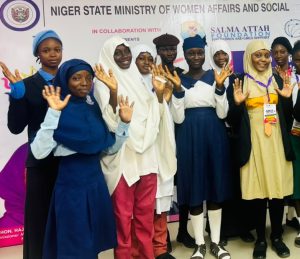
The call was made at a two-day Head Girls’ Leadership Summit organised to commemorate the 2026 International Day of the Girl Child in Minna.
The summit, held at the Women Development Centre, Minna, had the theme: “End Child Marriage and Invest in Girls’ Rights,” with the title, “Girls Who Lead: Head Girls’ Leadership Summit 2026 – From Head Girl to Change Maker.”
The Permanent Secretary of the ministry, Hajiya Hadiza Mohammed Shiru, who represented the Commissioner, Hajiya Hadiza Idris Kuta, reaffirmed the state government’s commitment to protecting girls’ rights and welfare.
Shiru described the participating head girls as emerging leaders who had demonstrated resilience, good character and leadership in their schools and communities.
She said the participants represented the aspirations of girls across Niger, who deserved safe, inclusive and equitable environments to learn, grow and realise their full potential.
The permanent secretary stressed the need to ensure that every girl had access to quality education, protection from gender-based violence, skills acquisition and mentorship opportunities.
She also called for an end to discrimination and harmful traditional practices, including child marriage.
According to her, investing in girls’ development is essential not only for their individual progress but also for building stronger families, healthier communities and sustainable economic growth.
The summit brought together head girls, educators, school proprietors, government representatives, mentors and other stakeholders to discuss girls’ leadership, education, safety and participation in decision-making.
A keynote session, “Investing in Girls, Building the Future We Want,” examined how education, personal agency, rights and leadership development could advance girls’ welfare and contribute to sustainable development.
Another session, “The Leadership Table: Women, Power and Possibility,” explored the contributions of women leaders in government, business, academia and civil society.
The girls’ leadership panel also provided a platform for participants to share their experiences and discuss practical solutions to challenges affecting them in schools and communities.
A major highlight was the School Change Challenge pitch presentation, during which students from various schools in Minna presented innovative ideas to address community challenges.
Maryam Babangida Science College emerged overall winner, while Galaxy International School came second and Nut End Well Science School secured third position.
The competition showcased the students’ creativity, confidence and problem-solving abilities, highlighting the importance of providing girls with platforms to develop practical leadership skills.
Other activities included spoken-word performances, leadership networking, the Head Girls’ Leadership Pledge and the presentation of certificates to participants and contributors.
Among those present was Hajiya Amina Jummai Gimba, founder of Farid Centre, alongside school proprietors, teachers and head girls from participating schools.
The ministry commended SAFWGS and other stakeholders for their contributions to the successful organisation of the summit.
It also acknowledged the roles of parents, teachers, mentors and school administrators in nurturing confident, responsible and capable female leaders.
The ministry reiterated its commitment to collaborating with relevant stakeholders to protect girls and other vulnerable groups across Niger.
It stressed the need for sustained partnerships among government institutions, civil society organisations, schools, families and communities to end child marriage, prevent violence and discrimination, and expand girls’ access to education and leadership opportunities.
The summit concluded with a renewed call for sustained investment in girls, with organisers emphasising that empowering the girl child was essential to building a more inclusive, resilient and prosperous Niger State.
