



By Aisha Ahmed
Dutse, Aug. 8, 2026
Beneficiaries of the Renewed Hope Social Security Grant in Jigawa have described the intervention as life-changing, helping them expand businesses, improve family welfare and strengthen household incomes.
Binta Musa, a beneficiary from Rajo community in Dutse Local Government Area, said the N75,000 grant she received in February had significantly transformed her family’s livelihood.
Musa said she invested N30,000 from the grant to establish a small business selling awara, using the money to purchase soya beans, groundnut oil and other ingredients.
She explained that she initially sold the soya bean cakes only in the mornings but had expanded operations to both morning and evening.
“Alhamdulillah, today I fry it for buyers in both the morning and evening. This has significantly improved our livelihood and family economy,” Musa said.
She said the business had enabled her to complement her husband’s efforts in providing food for the family and renewed her hope for her children’s future.
“This grant has rekindled and renewed my hope of having children who are well-fed, healthy and educated,” she said.
Similarly, Rabi Ismail Kiyawa, another beneficiary, said the intervention enabled her to expand her cap-making business and increase her income.
Kiyawa said she invested N40,000 from the grant into the business, adding that increased patronage had enabled her to engage other people in production.
“I am happy to tell you that my income has increased because I now hire other people to make caps based on customers’ demand,” she said.
The State Commissioner for Special Duties and Humanitarian Affairs, Auwal Danlado Sanka, disclosed that the Federal Government had released over N11.58 billion for beneficiaries across Jigawa.
Sanka said the programme targeted less-privileged households across the state’s 27 local government areas, with 178,342 beneficiaries currently covered under the intervention.
He said the programme initially captured 254,413 less-privileged households before the beneficiaries were streamlined to 178,342 under the current implementation arrangement.
According to him, implementation commenced in January 2026, with 126,639 households fully settled during the first phase of the programme.
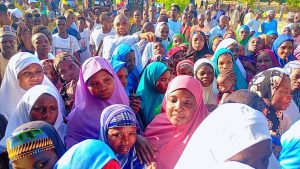
“We are currently in the second phase. A total of 25,300 payment cards are under distribution to registered beneficiaries,” Sanka said.
He expressed optimism that distribution of the cards would be completed before the end of August, enabling additional beneficiaries to access the intervention.
Sanka said beneficiaries under the second phase would receive a total grant of N1.9975 billion, in accordance with the programme’s implementation guidelines.
He noted that President Bola Ahmed Tinubu increased the grant from N10,000 per payment cycle to N25,000, citing current economic realities and market conditions.
The commissioner said the intervention was designed to support vulnerable families, improve livelihoods and strengthen nutrition security while stimulating economic activities within beneficiary communities.
According to him, about 99 per cent of the grant is expected to be spent locally, creating a multiplier effect across communities and supporting rural economic activities.
“If you inject such an amount of money into the local economy, it will have multidimensional positive impacts on productivity and GDP growth,” Sanka explained.
He said supporting household consumption would indirectly stimulate production, creating opportunities for employment, wealth generation and sustainable economic development.
Sanka therefore described the programme as both a humanitarian intervention and an economic strategy designed to promote inclusive and sustainable development.
He commended Gov. Umar Namadi for supporting the programme and creating an enabling environment for its implementation across the state.
The commissioner said feedback from communities indicated that the intervention was already improving household conditions and transforming beneficiaries’ lives.
“Thanks to President Tinubu, Governor Namadi, our team and all stakeholders who contributed to making this dream a reality,” Sanka said.
He assured beneficiaries and the public that the state would continue monitoring implementation and providing regular updates to support assessment, accountability and future planning.
