
The Jigawa State Executive Council has approved the institutionalisation of the Citizens Engagement Programme, flood preparedness measures, telecommunications infrastructure regulation, the state mechanisation headquarters and funding for the 2026 Jigawa Investment Summit.
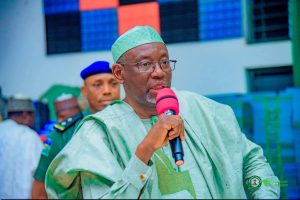
The decisions were reached during the State Executive Council meeting held on Monday, June 8, 2026, and chaired by Governor Malam Umar Namadi.
A major highlight of the meeting was the presentation of a comprehensive report by the Council Committee on the Citizens Engagement Programme, popularly known as Gwamnati da Jama’a.
The report recommended the institutionalisation of the initiative and provided an implementation framework aimed at strengthening participatory governance, transparency, accountability and citizen inclusion in decision-making processes.
The programme, conducted over a 10-month period across the state’s 27 local government areas, provided a platform for direct interaction between government officials and citizens.
According to the report, contributions from residents, traditional institutions, community leaders, women and youth groups, as well as civil society organisations, played a significant role in shaping government priorities.
Council noted that one of the programme’s major achievements was its contribution to the preparation of the 2026 state budget by ensuring that citizens’ needs and aspirations were reflected in government planning and resource allocation.
To sustain the gains recorded, the committee proposed a Citizens Engagement Participatory Governance Policy and a framework for implementation at both state and local government levels.
The proposal seeks to establish regular dialogue between government and citizens, improve transparency in public administration, strengthen accountability in service delivery and create structured feedback mechanisms.
Governor Namadi commended the committee and reaffirmed his administration’s commitment to inclusive governance, stressing that sustainable development can only be achieved when public policies are informed by the aspirations of the people.
The council also approved the constitution of a committee to review and harmonise the draft Jigawa State Right-of-Way and Telecommunications Infrastructure Regulation 2026.
The committee, chaired by the Commissioner for Lands and Urban Development, is expected to ensure that the proposed regulation aligns with relevant state and federal laws, urban planning guidelines and telecommunications standards.
It will also consult with key stakeholders before submitting a final draft for consideration and approval.
In another development, the council approved the procurement of emergency relief materials worth ₦835.94 million for the state’s 2026 Flood Preparedness and Response Programme.
The approval covers the purchase of food items, clothing materials and building materials to support vulnerable communities and facilitate rapid response to potential flood incidents across the state.
The materials will be managed by the State Emergency Management Agency (SEMA) and strategically positioned for timely deployment when required.
Council urged residents, particularly those living in flood-prone areas, to heed safety advisories issued by relevant authorities and cooperate with emergency response agencies.
The Executive Council further approved additional works valued at ₦155.38 million for the construction of the Jigawa State Mechanisation Company Headquarters in Dutse. The approval increases the total contract value of the project to ₦905.6 million.
The headquarters is expected to serve as a central hub for planning, coordination, monitoring and implementation of agricultural mechanisation programmes across the state.
The Council expressed confidence that the project would strengthen agricultural service delivery and support the state’s agricultural transformation agenda.
Additionally, the council approved the release of funds for the organisation of the 2026 Jigawa Investment Summit.
The summit is expected to attract local and international investors, development partners, financial institutions, business leaders and policymakers to explore investment opportunities in agriculture, agro-processing, renewable energy, manufacturing, solid minerals, commerce, infrastructure and technology.
According to the council, the summit forms part of the government’s broader strategy to attract investment, promote economic diversification, create jobs and strengthen public-private partnerships for sustainable development.
The resolutions were contained in a statement signed by the Commissioner for Information, Youth, Sports and Culture, Mr Sagir Musa Ahmed.
